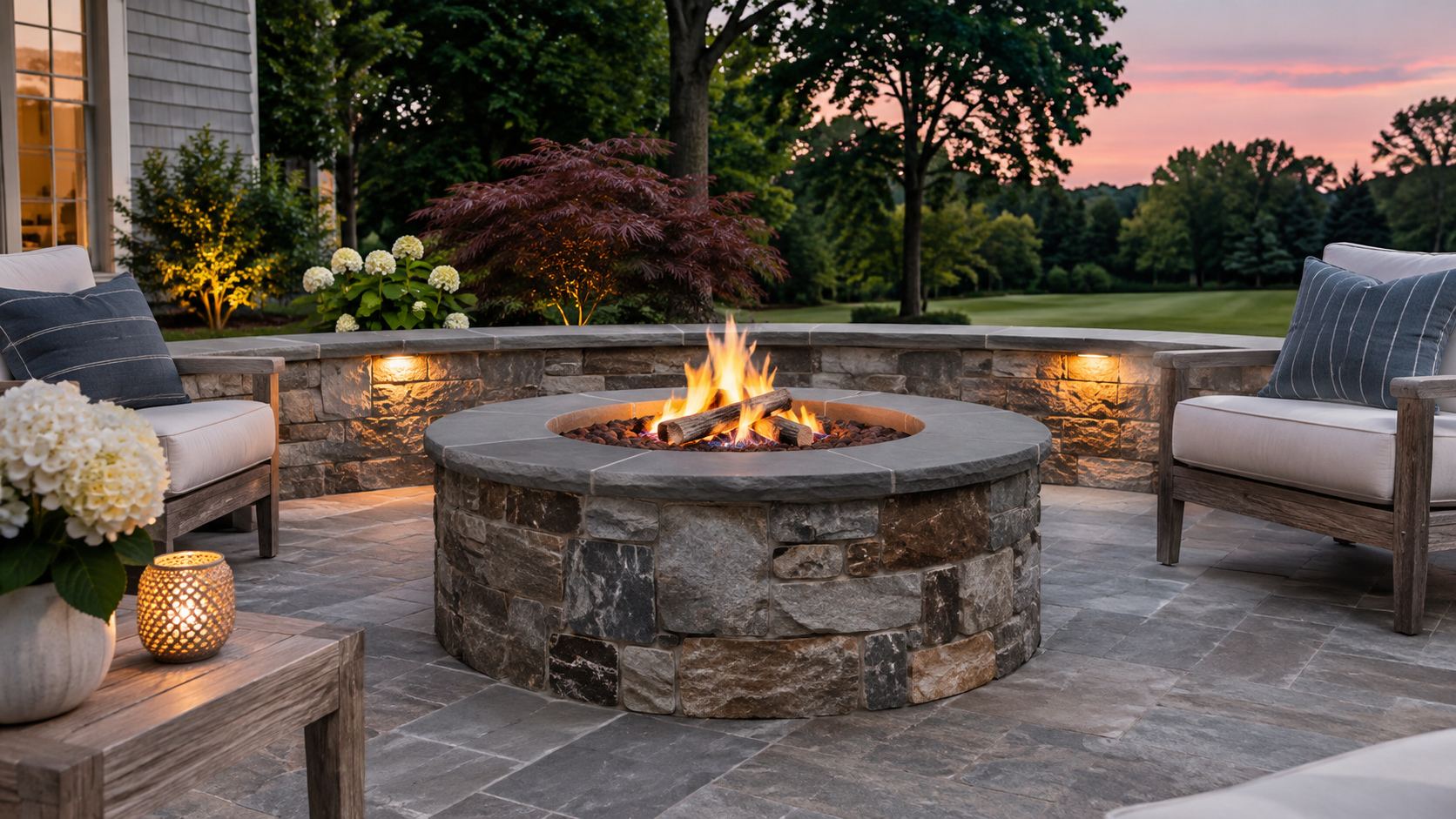
Who this is for
- A round or square fire pit with a seating area on a new patio
- Gas fire features added to an existing patio
- Masonry fireplaces that anchor an outdoor living room
- Linear fire tables next to a pool or kitchen
| Liner | Steel or firebrick liner inside the block |
|---|---|
| Base | Compacted base or footing under the full unit |
| Gas | Licensed gas line, burner pan, shut-off valve |
| Spacing | Clearance from the house and overhangs per code |
| Seating | Seat wall at 18 to 20 in. or space for chairs |
| Cap | Natural stone or matching cap, heat-rated |
Gas or wood
Gas fire pits run on natural gas or a hidden propane tank, light instantly and leave no smoke on your clothes or neighbors' windows. Wood pits give real crackle and cost less to build. Many Monmouth County towns have rules about open burning, so we check yours before you decide.
Fire pit vs fireplace
A fire pit puts everyone in a circle. A fireplace gives a focal wall, blocks wind and directs smoke up a chimney, which suits patios closer to the house or neighbors.
Placement
We set fire features clear of the house, overhangs and trees, and downwind of where you sit most.
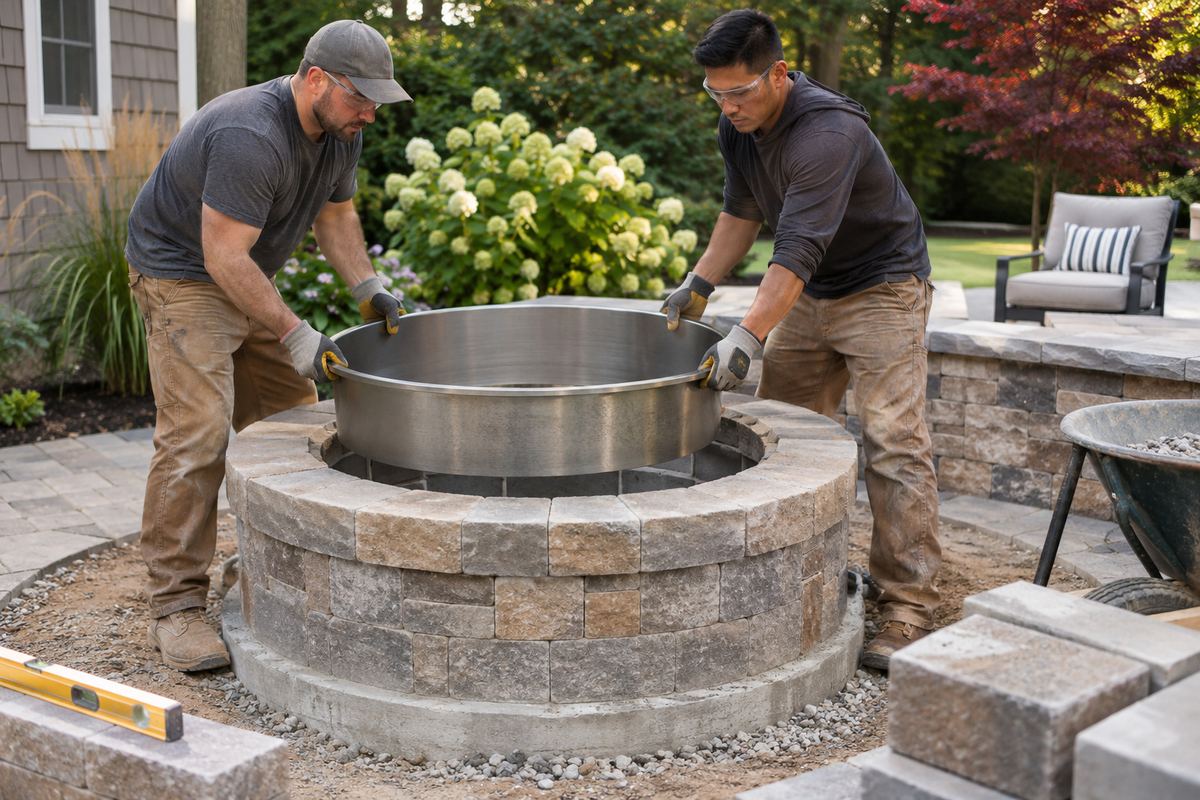 Concept image
What happens after you call
- 01
Site visit
Pick placement, gas or wood, and seating layout.
- 02
Design + estimate
Drawing with size, materials and gas run.
- 03
Permits
Gas permit where needed.
- 04
Build
Footing, block, liner, veneer, cap.
- 05
Hookup
Licensed gas hookup and test burn.
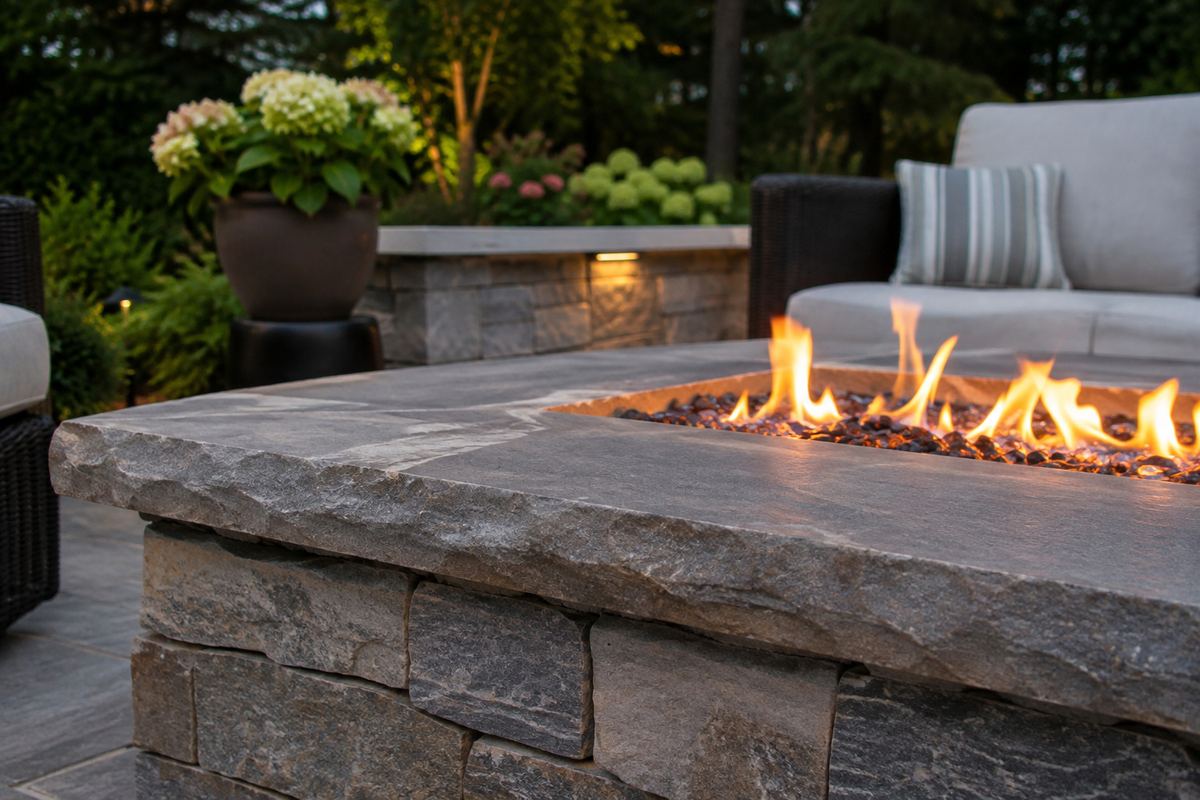 Concept image
Fire Pits + Fireplaces questions we hear on the phone
Can I add a fire pit to my existing patio?
Yes, in most cases. We cut out a section, install a footing and build the pit in.
How far from the house should a fire pit be?
Usually at least 10 feet from the house and any overhang, more for wood. We follow your town's rule if it sets one.
Natural gas or propane?
Natural gas if you have it at the house. Otherwise a buried or hidden propane tank works well.