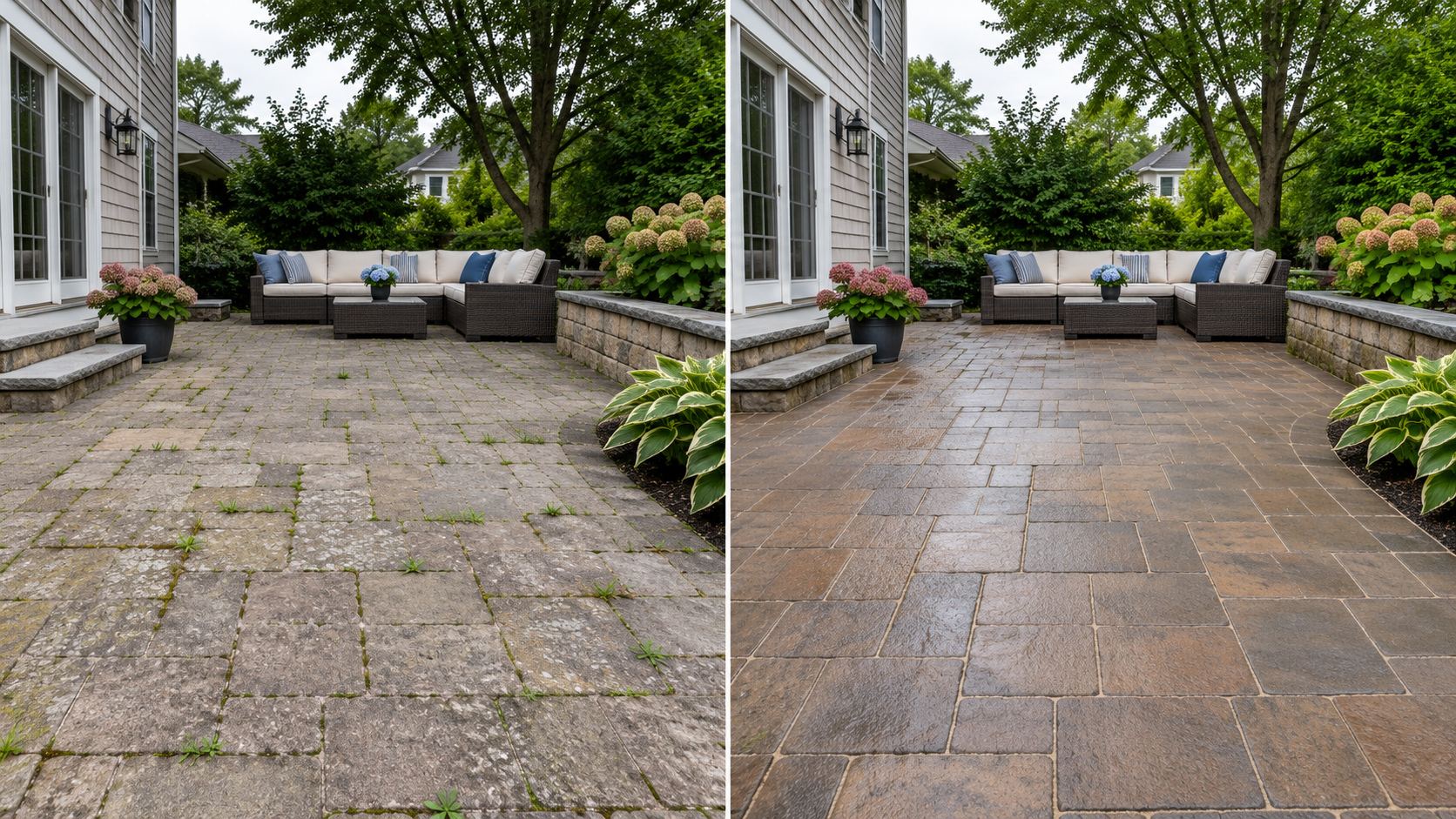
Who this is for
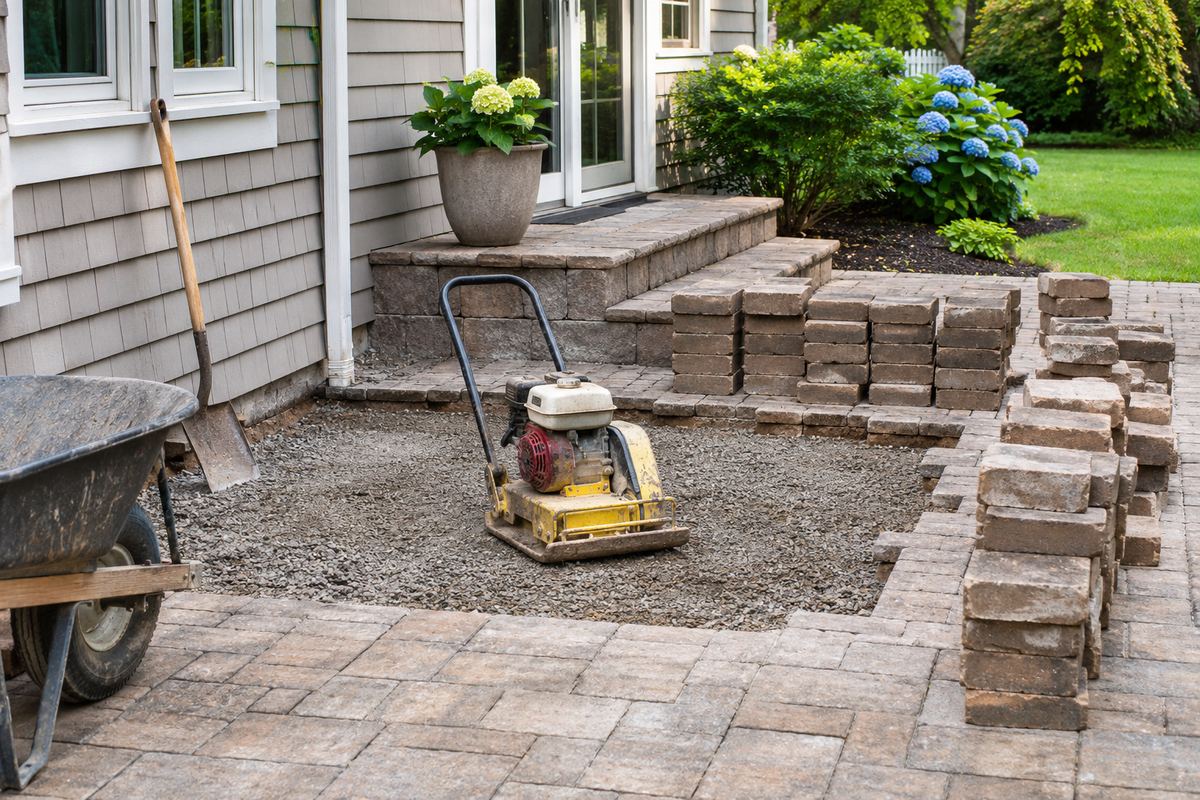
- Sunken areas and trip edges on patios and walkways
- Driveway ruts and pavers that have spread at the edges
- Weeds, moss and washed-out joints
- Faded or stained pavers that need cleaning and sealing
| Lift + reset | Pavers removed, base re-compacted, re-screeded |
|---|---|
| Edge | New restraint where the original failed or was missing |
| Cleaning | Surface clean with joint-safe pressure |
| Joints | Old sand removed, new polymeric sand |
| Seal | Breathable sealer, natural or wet look |
| Replace | Matching units sourced for broken or stained pavers |
Repair or replace?
If the problem is in one area, repair almost always makes sense. If the whole patio is rolling or pumping water at every joint, the base was never right and replacement costs less over the next ten years. We'll tell you which at the site visit.
Cleaning and sealing
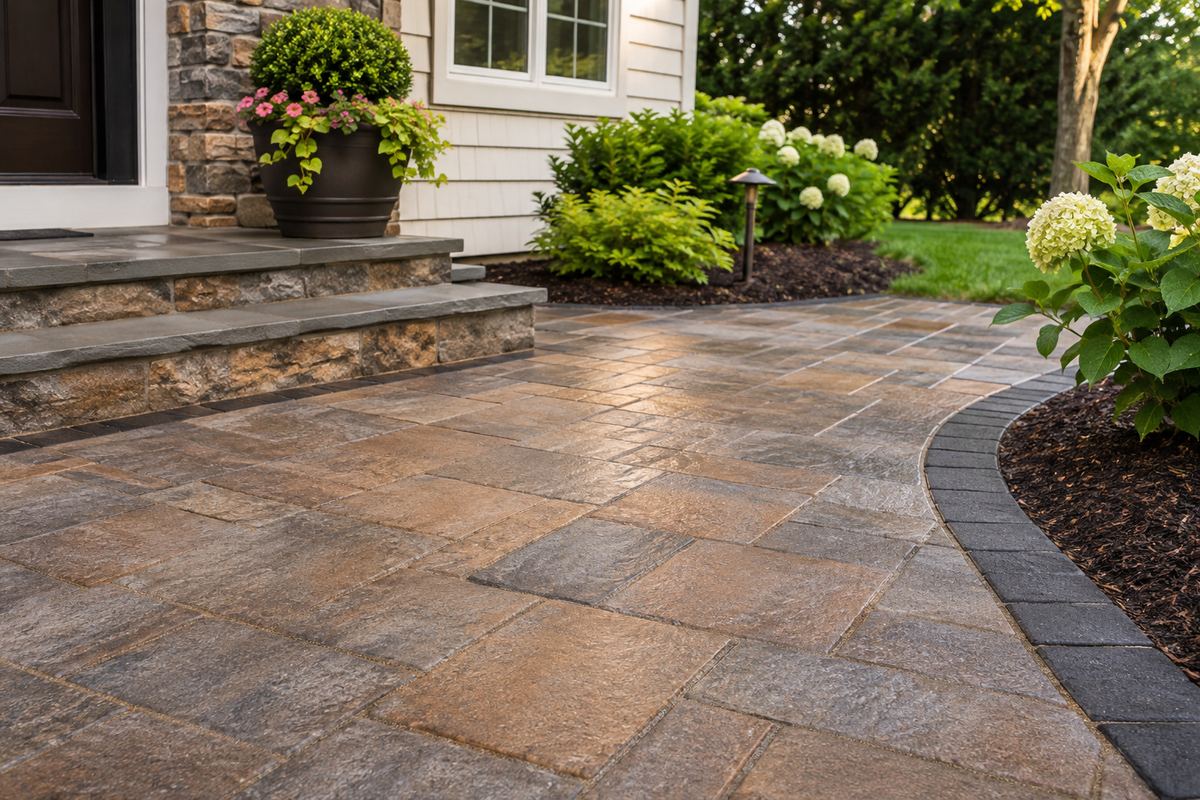
Cleaning removes algae, rust and grime; fresh polymeric sand locks the joints; sealer brings back color and makes oil and wine easier to wipe up. Plan to reseal every 3 to 5 years.
Matching old pavers
Many older Monmouth County patios used lines that are discontinued. We search suppliers for a match and, when none exists, borrow units from a hidden area and use new ones there.
 Concept image
What happens after you call
- 01
Site visit
Find the cause, not just the symptom.
- 02
Quote
Repair scope and optional cleaning and sealing.
- 03
Repair
Lift, fix base, reset, restrain.
- 04
Clean + sand
Clean surface, new polymeric sand.
- 05
Seal
Sealer applied after joints cure, if chosen.
 Concept image
Paver Repair + Sealing questions we hear on the phone
Why did my pavers sink?
Usually a soft spot in the base, often from a downspout dumping water or a utility trench that was never compacted.
Does sealing stop weeds?
It helps by hardening the joint sand. Polymeric sand does most of the work.
Can you repair brick pavers?
Yes. Clay brick repairs the same way, though matching old brick color takes more searching.