What raises or lowers the price
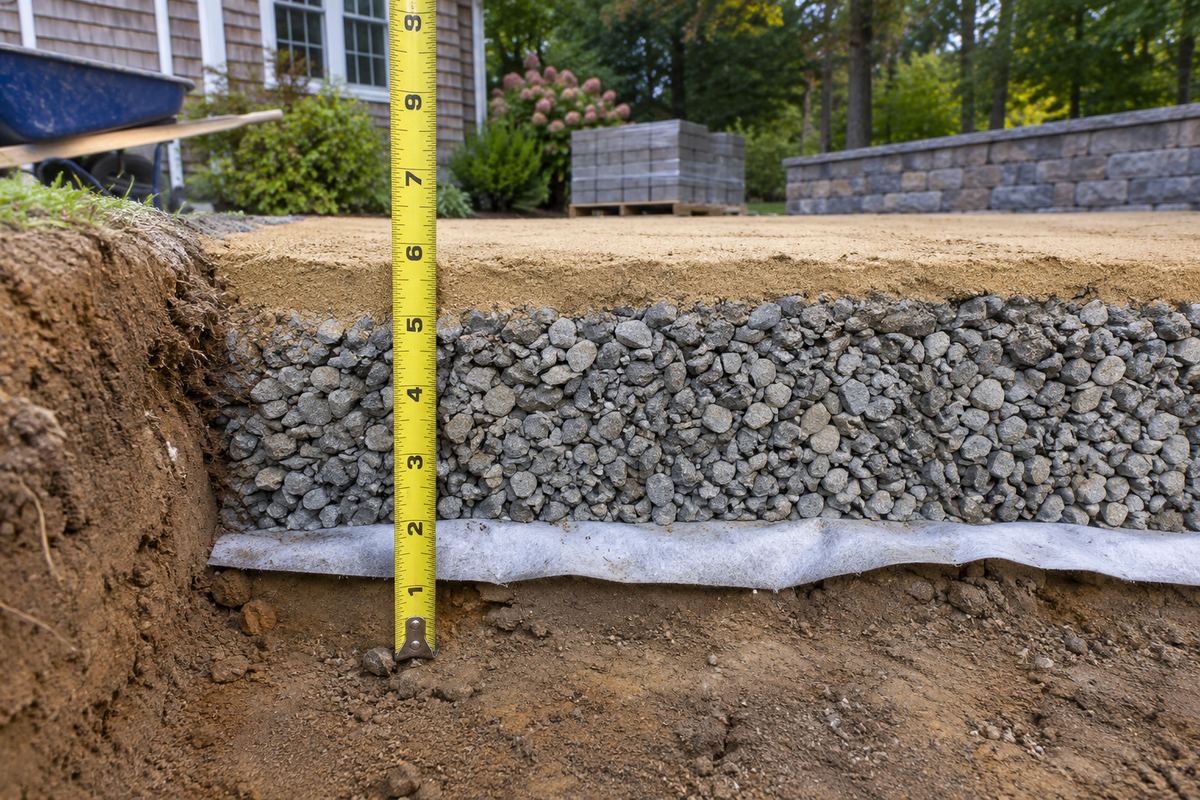
- Base and digging. A correct patio is excavated 8 to 10 inches. Clay soil, roots or an old slab to remove add labor and disposal.
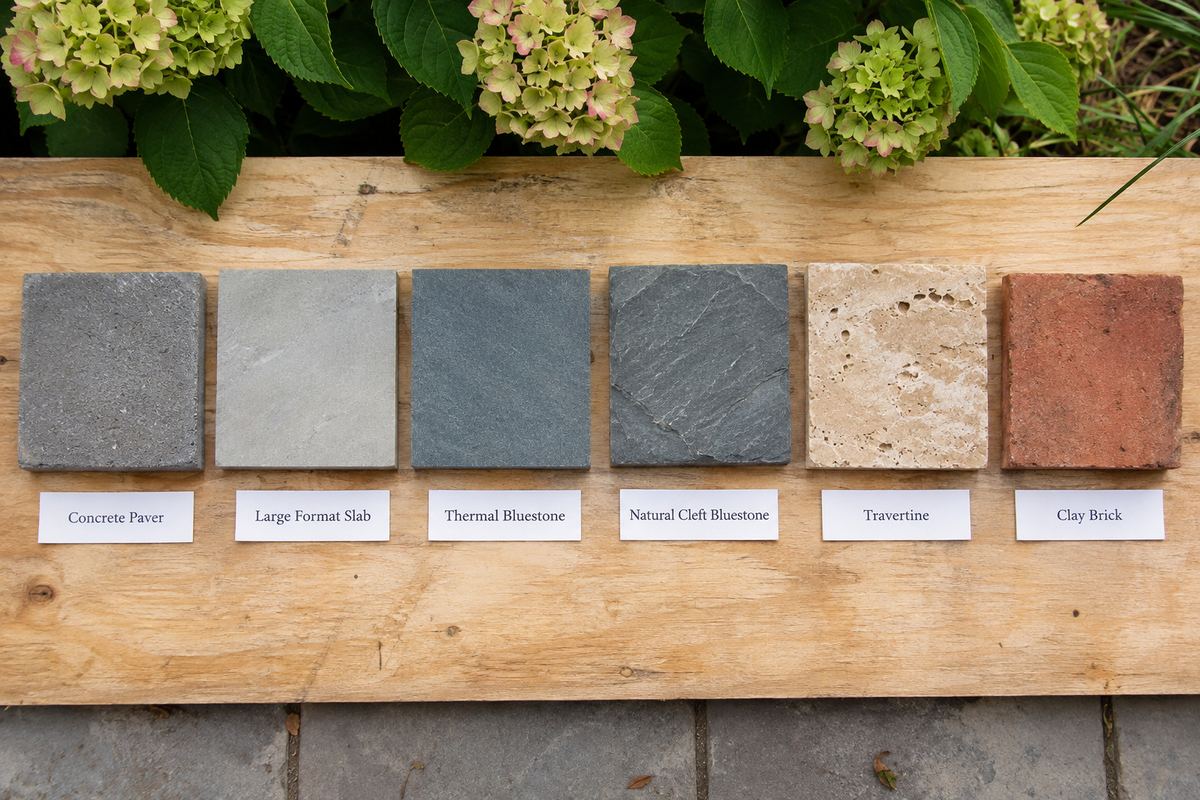
- Material. Standard concrete pavers cost least. Large-format slabs, bluestone and travertine cost more and take more cutting.
- Shape and pattern. Curves, inlays and borders add cutting time.
- Access. If a loader can't reach the backyard, material moves by hand or mini-skid, which adds days.
- Grade changes. Steps, seat walls and retaining walls are priced separately from the patio surface.
- Permits. Zoning permits, HOA review and engineering for tall walls add cost and time.
 Concept image
Why the cheapest quote often costs more
Two quotes for the same patio can be thousands apart because one includes a 6 inch compacted base, edge restraint and pitch away from the house, and the other doesn't. Ask every contractor to list excavation depth, base depth, compaction method and edge restraint in writing. Ours always does.
 Concept image
Cost questions
How much is a 20x20 paver patio in NJ?
A 400 sq ft paver patio in Monmouth County usually costs $9,000 to $16,000 installed, more with natural stone or a sloped site.
Are pavers more expensive than concrete?
Upfront, yes. Pavers usually cost more than a plain poured slab, but they don't crack the same way and single pavers can be replaced.
Is bluestone more expensive than pavers?
Usually. Dry-laid bluestone runs about $30 to $45 per sq ft, and mortar-set runs $45 to $65.
Do you charge for estimates?
No. Site visits and written estimates are free.
Next: see the paver patio, bluestone patio and driveway pages for build specs.